Virtual School vs. Traditional Public School: How to Know Which Is Actually Better for Your Kid
PSPauline Smith EdD · July 27, 2026 · 5 min read
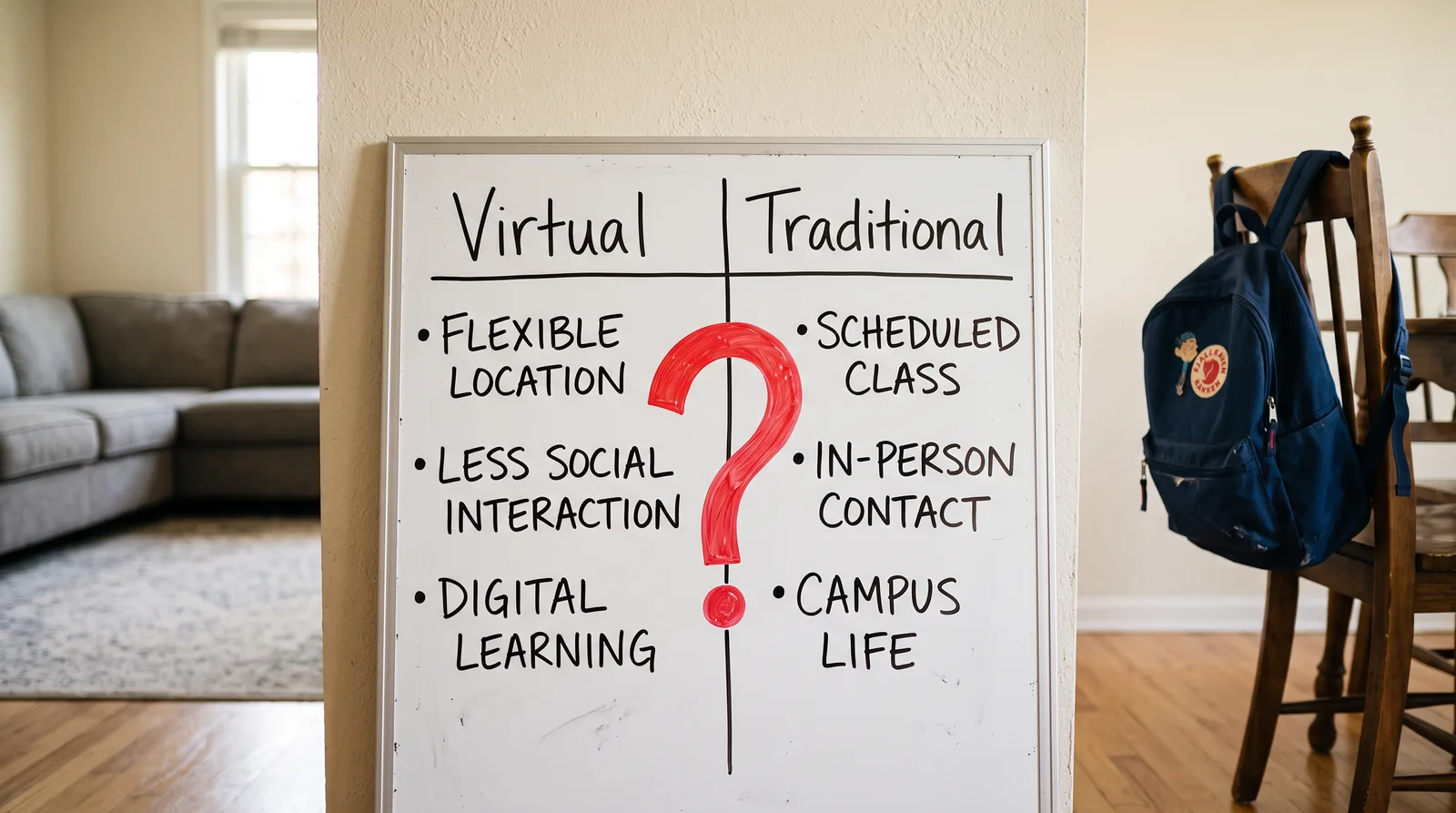
Choosing a school used to feel simple: you moved into a zip code, and the decision was made for you. But that default is no longer the only option — and for a growing number of families, it's not even the best one. Virtual schools have matured dramatically. So has what we know about learning styles, executive function, and what kids actually need to thrive.
This post won't tell you which choice is right. What it will do is give you a real framework — four concrete lenses — so you can make the call yourself, with confidence.
Lens 1: How Does Your Child Self-Regulate?
This is the question most comparison articles skip, and it's probably the most important one.
Traditional public school provides an external structure: bells, hallway transitions, a teacher physically present, and social pressure from peers. For kids who struggle to generate their own momentum, that scaffolding is genuinely valuable. It's not a crutch — it's a support system.
Virtual school, by contrast, asks a student to do something developmentally hard: initiate learning without an external prompt. A 9-year-old who needs a transition warning before every subject change, or a 14-year-old who disappears into YouTube the moment the screen is "theirs," will not automatically adapt just because the curriculum is excellent.
Ask yourself: Without a physical reminder, can my child start a task, sustain it for 30–45 minutes, and return to it after a break? If yes — virtual school is workable. If not — that skill needs to be built first, or the virtual environment needs to include structured live sessions and real-time check-ins.
Lens 2: What Kind of Learner Are You Actually Looking At?
Think about the last time your child was deeply engaged in learning something. Where were they? Who was around? How long did it last?
Some kids learn by arguing ideas out loud with other people — they need the friction of a classroom discussion to consolidate understanding. Others shut down in that same room because the pace is wrong, the content moved on before they were ready, or they finished the assignment ten minutes early and spent the rest of the period doing nothing.
A full-spectrum virtual school built on frameworks like Universal Design for Learning (UDL) and IB-style inquiry allows a student to move through material at their cognitive pace — not the class average. For twice-exceptional learners (gifted kids who also have learning differences), advanced learners, or kids whose interests are genuinely niche, that flexibility can be the difference between a child who loves school and one who tolerates it.
Traditional public school, even a strong one, optimizes for the middle of the distribution. That's not a criticism — it's a structural reality of serving 25 kids in one room.
Lens 3: Socialization — But the Real Version of the Question
The socialization concern is legitimate, and it deserves a more precise answer than "virtual kids can still have friends."
The actual question is: What kind of social development does your child need right now?
Traditional public school delivers high-volume, low-choice social exposure. Your child will navigate friendships, conflict, group dynamics, and the social hierarchy of a physical institution — whether they're ready for it or not. For kids building confidence and social fluency, that exposure is growth. For kids dealing with bullying, anxiety, or social exhaustion, it can be the reason they stop absorbing anything academic at all.
Virtual school requires parents to be intentional about social infrastructure: co-ops, sports leagues, theater programs, community volunteering, faith communities, neighborhood friendships. It doesn't happen automatically. If you're not prepared to build that calendar deliberately, the isolation risk is real.
The honest check: Do you have at least two or three consistent, recurring social contexts you can plug your child into outside of school hours? If yes, the social development piece is solvable. If your schedule or geography makes that genuinely difficult, weight that heavily.
Lens 4: What Does Accountability Look Like for Your Family?
Virtual school is a team sport. It requires a parent or caregiver who can check in on progress, troubleshoot when a student is stuck, and communicate regularly with teachers and advisors. That's not a full-time job, but it is a real commitment — probably 30 to 60 minutes a day for elementary students, less as kids get older and more independent.
If your household has two working parents with inflexible schedules, or if you're a single parent managing multiple children, that accountability load matters. It doesn't make virtual school impossible — plenty of families make it work — but you need a plan before enrollment, not after.
Traditional public school absorbs most of that daily accountability load institutionally. Teachers follow up. Counselors notice. The system catches things. That's a real feature, not a flaw.
Making the Call
Run your child through all four lenses:
- Self-regulation — Can they initiate and sustain, or do they need external structure?
- Learning style — Do they need pace flexibility and depth, or do they thrive with peer-driven energy?
- Socialization — Will you build the calendar, or does the building do it?
- Family accountability — Do you have the bandwidth to be the daily check-in partner?
If three or four lenses point the same direction, your answer is probably clear. If they're split, dig into the one that feels most urgent for your child right now — kids change, and so can the plan.
The goal isn't to find the objectively better school. It's to find the right environment for the specific kid sitting across from you at the kitchen table.
If you want to explore what a structured, full-spectrum virtual program actually looks like — one built for every kind of learner from Pre-K through 12th grade — I'd love to walk you through it.
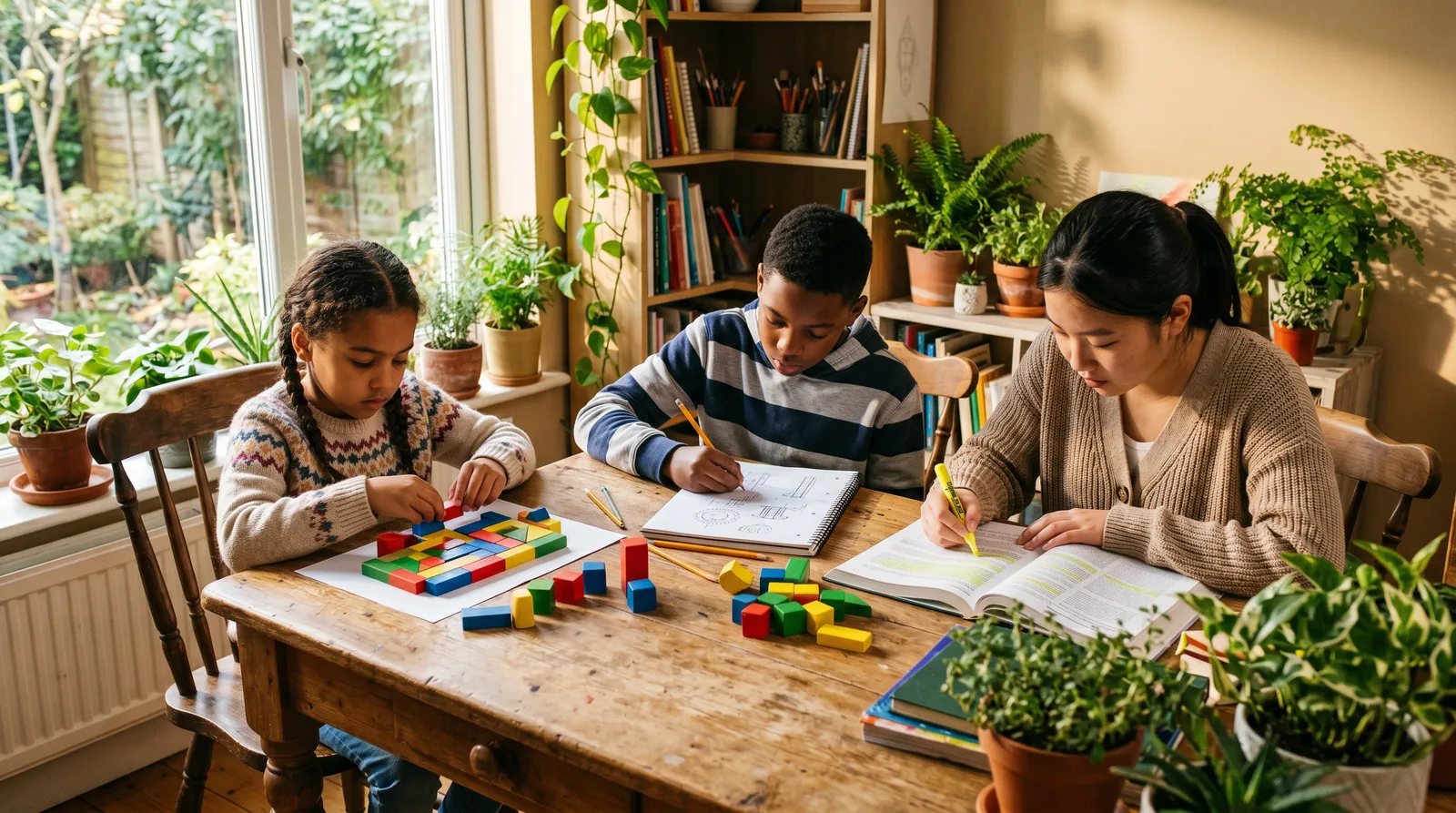
Want to go deeper than a blog post?
Brown Tech Global Academy Pre-K - 12th Grade by Brown Tech Academy Industry
A full-spectrum, accredited virtual school delivering credit-bearing Pre-K–12 courses that weave IB rigor, UDL inclusivity, SEL, TAG enrichment, MESA STEM pathways, and Odyssey of the Mind creativity into one college-, career-, and innovation-ready experience — for every kind of learner.
Start learning — $300/mo